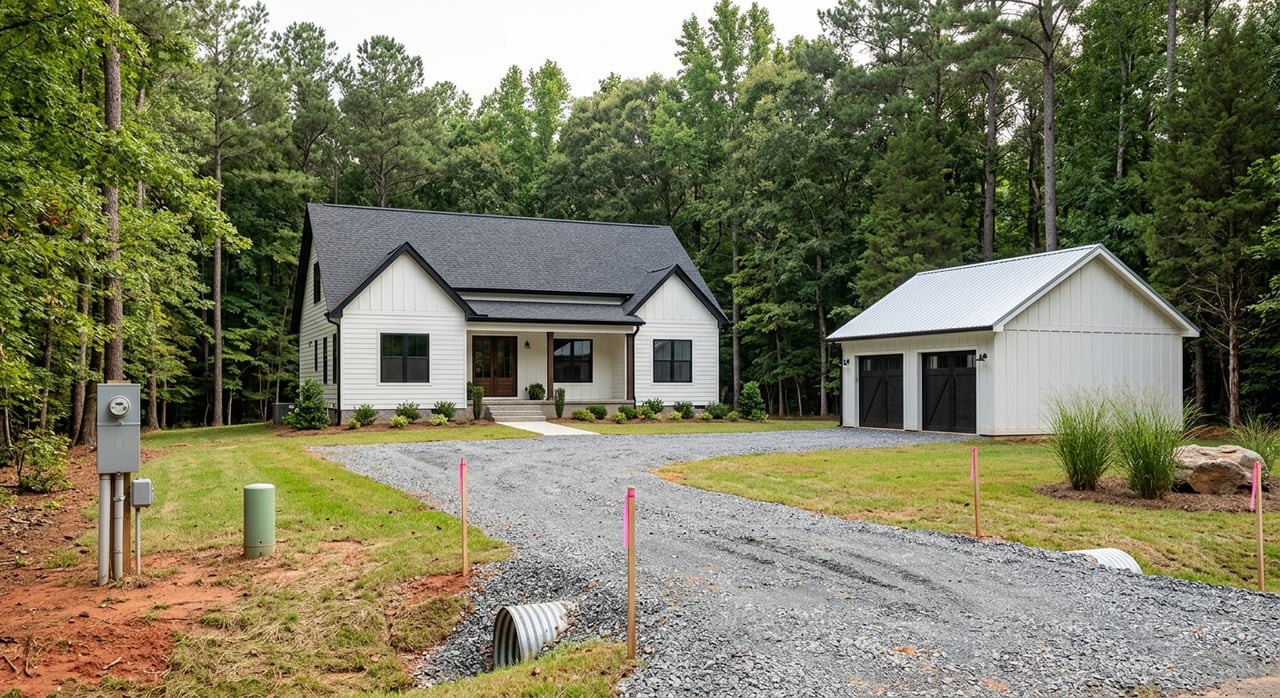
Buying land in Ranger can feel exciting right up until the questions start piling up. Can you actually build on it? Is there legal access? Will septic and a well work? If you want more space, privacy, or a future homesite in Gordon County, those details matter just as much as the acreage itself. This checklist will help you focus on the due diligence steps that can protect your budget, timeline, and plans before you close. Let’s dive in.
Start With Ranger's Local Setup
Ranger is now served through Gordon County for planning, development, public safety, and public-facilities services. According to the county’s joint comprehensive plan, county government handles these functions in the area, which means your land research should begin with Gordon County offices and resources.
That matters because zoning, mapping, permitting, septic review, and address-related steps all run through county-level departments. If you are buying land for a home, barn, shop, or future project, understanding that process early can save you from costly surprises later.
Confirm Legal Access First
Before anything else, make sure the parcel has clear, documented access. You want to verify the recorded deed, the property plat, any easements, and exactly how the property connects to a public road or shared drive.
This is not just a nice-to-have item. Gordon County’s building permit process requires a recorded deed and plat, and it also states that a driveway inspection is required before an address is issued for new projects or additions or upgrades.
If the property does not yet have a street address, Gordon County Emergency Management can help with that step. It is much better to sort out access and address questions before closing than after you already own the land.
Access questions to ask
- Is there recorded road frontage or a legal easement for ingress and egress?
- Does the deed match the plat and current use of the property?
- Is the driveway location likely to meet inspection requirements?
- If access is shared, are the terms documented in recorded easements?
Use GIS Maps Carefully
County maps are a great starting point, but they are not the final answer. Gordon County’s GIS office maintains parcel maps and other public mapping data that can help you get an early look at boundaries, neighboring parcels, and general site features.
Still, GIS maps should not replace a legal survey when boundary lines, encroachments, or easements matter. If you are buying acreage in Ranger, a survey is often one of the smartest due diligence tools you can order.
When a survey becomes especially important
- Boundary lines are unclear
- The parcel is wooded or irregularly shaped
- You plan to build near a property line
- There are questions about easements or encroachments
- You want to identify the best build site before closing
In practice, a survey also supports later steps because county permitting asks for a plat, and Georgia’s septic review materials rely on survey and topographic information for certain sites.
Check Zoning and Future Land Use Early
If you are thinking about a home, accessory building, agricultural structure, or future split of the land, check zoning right away. Gordon County says the Planning and Zoning Commission reviews zoning and future land-use map issues for unincorporated areas and also hears variance requests.
That means your intended use and the parcel’s current status need to line up. You should not assume that because land looks rural, every future use will be allowed the way you expect.
Gordon County’s permit information also says permits are typically required for projects over 120 square feet, including accessory and agricultural structures. So if your plan includes a workshop, barn, storage building, or similar improvement, it is worth confirming requirements before you buy.
Zoning checklist for Ranger acreage
- Confirm current zoning with county staff
- Ask about the future land-use designation
- Discuss your intended improvements before closing
- Ask whether a variance or special review may be needed
- Confirm whether your long-term plan includes any restrictions on splitting the tract
Treat Water as a First-Order Issue
If the parcel will rely on a private well, your water plan needs attention early. The Georgia Department of Public Health says wells must be installed by a licensed water well contractor, and the county health department must be notified before drilling.
State guidance also includes setback standards, including 50 feet from a septic tank and 100 feet from a septic absorption field. You can review those requirements through Georgia DPH’s well water guidance.
After construction, the well must meet testing and approval requirements. Georgia DPH notes a coliform test is required after construction and disinfection before final approval, and it recommends annual bacteriological testing plus chemical screening every three years.
Water questions to answer before closing
- Will the property use a private well?
- Is there a suitable location for the well based on required setbacks?
- Does the site layout leave room for both well and septic placement?
- Have you talked with the county health department about the process?
Never Assume Septic Will Work
A large lot does not automatically mean an easy septic approval. Gordon County’s Health Department handles environmental health review for private wells and septic permits, and the county permit process requires either a septic permit or a no-impact letter from Environmental Health.
Georgia DPH’s onsite sewage materials explain that permit review may involve test holes, percolation tests, and soil reports by a certified soil classifier. On marginal sites or parcels with restrictive topography, an engineered site plan from a state-registered engineer may be required.
This is one of the biggest reasons raw land buyers should do due diligence before closing. If septic does not work where or how you expected, your building plans and costs can change fast.
Septic due diligence checklist
- Contact Environmental Health early
- Ask what site testing may be needed
- Confirm whether the lot already has a septic permit history
- Evaluate where the usable septic area may be located
- Budget for extra review if soils or topography are challenging
Watch Slope, Drainage, and Floodplain
Natural features can affect buildability more than many buyers expect. Georgia’s onsite sewage rules define usable area in a way that excludes bodies of water, floodplain, easements, and similar limitations, which means not every part of the acreage may count toward a workable homesite.
Flood screening is also a smart early step. FEMA’s Flood Map Service Center is the official public source for flood hazard maps, and it can help you identify whether floodplain considerations may affect your plans.
Well placement can also be affected by flood risk. Georgia DPH says a well should not be placed in a flood-prone area unless the casing extends at least two feet above the highest known flood of record.
Site condition red flags
- Steep slopes near likely build sites
- Drainage patterns that direct water toward the home area
- Floodplain overlap
- Limited level ground for house, driveway, well, and septic layout
- Heavy tree cover that makes site evaluation harder without professional review
Build Your Due Diligence Team
Land purchases usually need more moving parts than a typical home purchase. In Ranger, a practical team often includes county planning and zoning staff, Environmental Health, a licensed surveyor, a licensed well contractor, and, when septic is involved, a soil professional or engineer.
These professionals help answer the questions that online listings cannot. They also help you move from “this property looks promising” to “this property supports my actual plan.”
Key local contacts for Ranger land buyers
According to Gordon County’s permit process information, these are some of the most relevant offices for land due diligence:
- Community Development: 706-629-0505
- Environmental Health / Health Department: 706-624-1444
- Septic permit line: 706-624-1440
- GIS: 706-629-6812
- Planning / Zoning: 706-879-2175
- Emergency Management for address help: 706-602-2905
A Simple Land-Buying Checklist
If you want a practical way to organize your next steps, use this list before you move forward with a purchase:
- Review the deed, plat, and recorded easements
- Confirm legal access to a public road or documented shared drive
- Check GIS maps for a first look, then order a survey if needed
- Verify zoning and future land-use designation with Gordon County
- Ask about permit requirements for homes, barns, shops, and other structures
- Contact Environmental Health about septic requirements or permit history
- Plan for well placement and required setbacks
- Screen for slope, drainage, and floodplain concerns
- Confirm the property can support your intended build site layout
- Line up the right local professionals before your due diligence period ends
Why This Matters Before Closing
The right acreage can open the door to a great long-term plan. The wrong parcel can bring delays, extra engineering costs, access issues, or buildability limits you did not see coming at first glance.
That is why land buying in Ranger is not just about finding enough acres. It is about making sure the land fits your goals, your timeline, and your budget with the county requirements in mind.
If you are thinking about buying land or acreage in Ranger, having a local guide can make the process feel much more manageable. Amanda Brown and the team at Amanda Jo Realty Group offer calm, practical support for Northwest Georgia buyers who want to ask the right questions before they commit.
FAQs
What should you check first when buying land in Ranger, Georgia?
- Start by confirming legal access, the recorded deed, the property plat, and any easements, because those items affect both ownership clarity and future permitting.
Do you need a survey for acreage in Ranger, Georgia?
- A survey is often the smart move if there is any uncertainty about boundary lines, access, easements, encroachments, or future build locations.
Who handles zoning and planning for land in Ranger, Georgia?
- Gordon County handles planning and development functions for Ranger, and the county Planning and Zoning Commission reviews zoning and future land-use matters for unincorporated areas.
Can a large lot in Ranger, Georgia still have septic problems?
- Yes, because septic approval depends on soils, topography, and site conditions, not just lot size.
Where can you check flood risk for land in Ranger, Georgia?
- The official public source for flood hazard screening is FEMA’s Flood Map Service Center.
What county offices matter most when buying land in Ranger, Georgia?
- The most relevant offices usually include Community Development, Planning and Zoning, GIS, Environmental Health, and Emergency Management for address-related help.