Dreaming about a little more space, a garden, a workshop, or a few animals near Fairmount? You are not alone. Many buyers looking at small farm and homestead properties in this part of Gordon County want a quieter lifestyle, but they also want to make a smart purchase. The good news is that Fairmount can be a strong fit for land-and-lifestyle buyers, as long as you match the property to how you actually plan to use it. Let’s dive in.
Why Fairmount Appeals to Homestead Buyers
Fairmount is closely tied to a low-density, country-living identity. The City of Fairmount describes its mission as maintaining low-density country living, and Gordon County’s long-range planning places Fairmount within a mix of land-use areas that include greenspace, highway corridor areas, hillside conservation, and in-town development areas.
That matters because not every property with a Fairmount address will feel the same. One parcel may offer a tucked-away rural setting, while another may sit closer to Highway 411, where the county notes a mix of residential, commercial, and light industrial uses along with high truck traffic and speed concerns.
What “Small Farm” Means Near Fairmount
In the Fairmount area, “small farm” does not point to one exact acreage number. It usually means land that gives you room for a home and some combination of outdoor living, gardening, recreation, pasture, or outbuildings.
Gordon County’s 2022 Census of Agriculture helps give that idea some local context. The county had 592 farms covering 77,290 acres, with an average farm size of 131 acres. The county’s farm-size pattern leans heavily toward properties in the 10 to 49 acre and 50 to 179 acre ranges, which helps explain why buyers often view smaller acreage here as a practical entry point into the farm-and-lifestyle market.
Common Acreage Ranges
A simple way to think about local property sizes is this:
- 1 to 5 acres: often a good fit for starter homesteads, gardens, or a home site with extra breathing room
- 5 to 15 acres: a common sweet spot for buyers who want a house plus pasture, a workshop, or a modest hobby-farm setup
- 20 to 50 acres: often better for larger livestock plans, added privacy, recreation, or multi-use rural living
- 100+ acres: more likely to appeal to buyers looking for larger farm, timber, or investment tracts
The key is not just acreage. It is whether the land’s layout, utilities, access, and rules support your goals.
Features Buyers Often Want
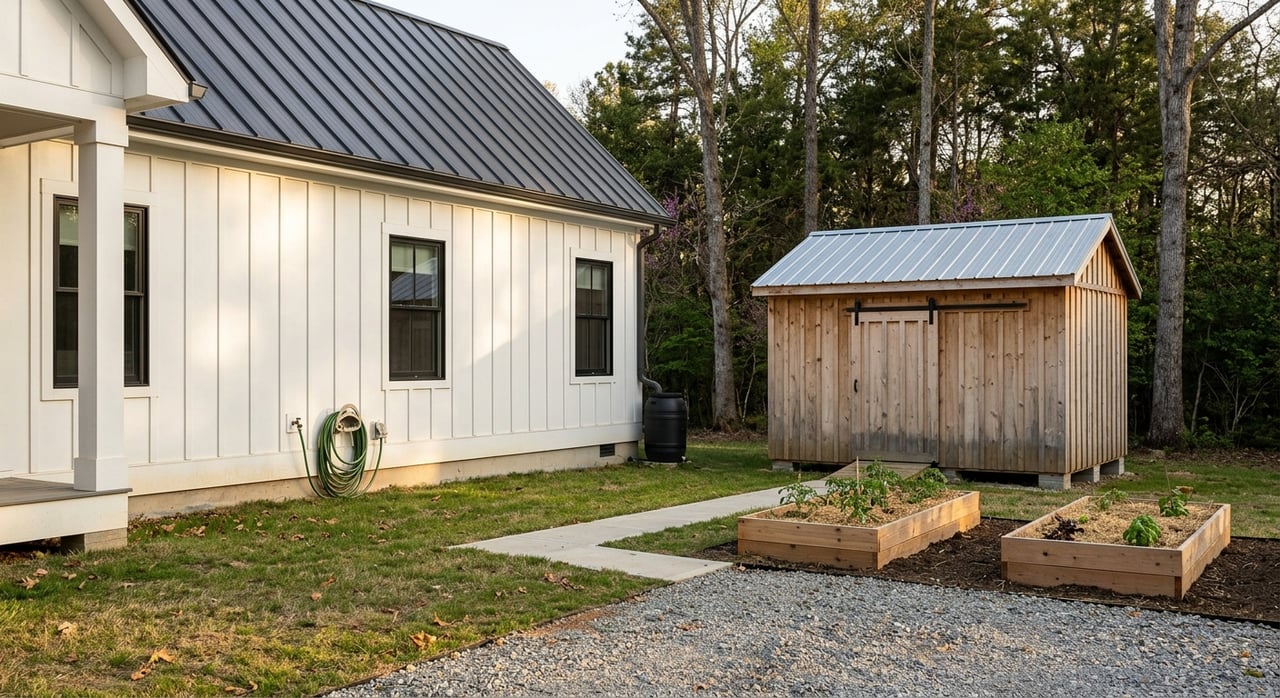
Small farm and homestead properties near Fairmount often come with a mix of practical and lifestyle-focused features. Recent local examples show buyers paying attention to open land, wooded sections, water features, and extra structures that make rural living more flexible.
You may see properties with wells, septic systems, fenced pasture, ponds, creeks, streams, detached workshops, sheds, or multiple possible home sites. Some listings also highlight garden space, fruit trees, solar power, rainwater catch systems, or room to expand over time.
Utility Setups Can Vary
Utilities are one of the biggest differences between rural properties. Some parcels may have public water available, while others rely fully on a well and septic. Some may also include propane or other supplemental systems.
Internet service can vary too, even from one road to the next. Gordon County reported that 17% of residential and business locations were unserved by fixed broadband standards in 2022, so it is important to verify service at the exact parcel rather than assume coverage based on the general area.
Know the Land Before You Buy
A beautiful piece of land can still come with limits. Before you fall in love with the view, make sure the property supports what you want to do now and later.
Gordon County’s planning framework notes that some rural and agricultural areas are best suited for agricultural and large-lot uses, and it discourages sewer extension in those areas. The same plan also notes that development in floodplains is greatly restricted or prohibited, and stream buffer requirements may apply.
Floodplains and Topography Matter
Some areas around Fairmount include floodplains, especially near Salacoa Creek greenspace areas. If a property includes low-lying land, drainage corridors, or steep slopes, those features can affect where you can build, grade, fence, or place barns and other structures.
This does not always rule a property out. It simply means you need clear answers before closing.
Highway 411 Can Change the Feel
Two properties with the same Fairmount mailing area can offer very different day-to-day experiences. Land near Highway 411 may provide convenience and visibility, but the county says the corridor also has high truck traffic and speed concerns.
If your goal is quiet, privacy, wildlife, or animal use, you may want to weigh those tradeoffs carefully. A back-road tract may fit your lifestyle better than a corridor-fronting parcel, even if both seem similar online.
Permits and Due Diligence Matter More Here
Buying a small farm or homestead property usually requires more homework than buying a typical subdivision lot. That is normal, and it is one reason local guidance can make a real difference.
In Gordon County, the Community Development Department is the first point of contact for floodplain management, soil and erosion control standards, land-disturbing activities, utility construction, and permit plan review. For building permits, the county says buyers may need a recorded deed and plat, a septic permit from Gordon County Environmental Health, and in some cases a no-impact document if the project does not affect septic.
Water and Sewer Costs
If a parcel connects to city services, fees can be a major part of your budget. As of June 2024, the City of Fairmount’s posted water-rate sheet lists a 3/4-inch water tap fee of $2,500, a 1-inch tap fee of $3,500, and a regular sewer tap fee of $1,500.
The same rate sheet notes that existing sewer taps require a $350 connection fee plus inspection. These are the kinds of costs buyers should clarify early, especially if a parcel looks affordable at first glance.
Animal Plans Need Practical Planning
If you picture chickens, goats, horses, or other livestock, think beyond the dream and into the setup. Fairmount’s animal code includes Gordon County Animal Control rules that cover livestock and other designated animals and require them not to run at large.
That means fencing, containment, and property layout matter. It also means you should confirm whether any local rules, covenants, or site constraints could affect how you keep animals on the property.
Questions to Ask Before Making an Offer
When you shop for homestead or small farm property near Fairmount, a strong checklist can save you time and stress. Here are some of the most important questions to ask.
Property Location and Jurisdiction
- Is the property inside the city limits of Fairmount?
- Is it in unincorporated Gordon County?
- Does the Fairmount address actually place it in a nearby county?
Jurisdiction affects land-use rules, permitting, and utility questions.
Water, Septic, and Access
- Is the property served by city water, a well, or some combination?
- Are tap fees or connection fees still unpaid?
- Does a septic system already exist?
- Is there a septic permit or existing-system evaluation on file?
- Is the driveway legal and usable in all weather?
- Does the parcel already have a recorded street address?
These answers can shape both your budget and your timeline.
Buildability and Future Plans
- Is any part of the land in a floodplain, drainage corridor, or steep slope area?
- Are there stream buffers or land-use restrictions?
- Are there subdivision covenants or zoning limits?
- Can you add a barn, workshop, greenhouse, RV pad, or second structure later?
- What is the actual broadband service at the parcel itself?
For rural property, future plans matter almost as much as current use. Buying land that works for your next step can help you avoid expensive surprises later.
Matching the Right Property to Your Lifestyle
The best small farm or homestead property near Fairmount is not always the biggest one or the prettiest one online. It is the one that fits your daily life, your long-term plans, and your comfort level with utilities, upkeep, and access.
For some buyers, that means 3 to 5 acres with a garden, shop, and a little privacy. For others, it means 10 to 15 acres with fenced pasture and room to expand. And for others, it means a larger tract with room for recreation, livestock, or multiple uses.
A calm, informed process matters here. When you look closely at utilities, topography, road access, and local rules, you can shop with more confidence and avoid buying land that only works in theory.
If you are exploring small farm and homestead properties near Fairmount, having a local team that understands land, lifestyle goals, and rural due diligence can make the process much easier. When you are ready to talk through acreage, access, utilities, or what kind of property fits your plans, reach out to Amanda Brown.
FAQs
What size property counts as a small farm near Fairmount?
- Near Fairmount, buyers often think of 1 to 5 acres as a starter homestead, 5 to 15 acres as a common hobby-farm range, and 20+ acres as a better fit for larger livestock, recreation, or multi-use rural living.
What utilities should buyers check on Fairmount homestead properties?
- You should confirm whether the parcel has city water, a well, septic service, propane or other systems, and parcel-specific internet availability before you move forward.
What permits are important for building on land near Fairmount?
- In Gordon County, buyers should review recorded deed and plat requirements, septic permitting through Environmental Health, and any Community Development review tied to grading, floodplain issues, utilities, or land disturbance.
What land issues can affect building on acreage near Fairmount?
- Floodplains, stream buffers, drainage corridors, steep slopes, and corridor location can all affect where you can build and how you can use the land.
Can you keep animals on a homestead property in Fairmount?
- Animal plans may be possible, but you should verify local rules, parcel constraints, and fencing needs because designated animals and livestock cannot run at large under local animal control rules.
Why is Highway 411 important when buying land near Fairmount?
- The Highway 411 corridor can feel very different from back-road properties because the county notes mixed uses, high truck traffic, and speed concerns in that area.