Wondering why one Ranger land listing looks like a bargain while another seems expensive at first glance? If you are thinking about buying or selling acreage here, the sticker price alone does not tell the full story. In Ranger, land value often comes down to access, terrain, utilities, and what the property can realistically be used for. This guide will help you make sense of land prices and offers with more confidence. Let’s dive in.
Why Ranger land prices vary so much
If you look at land prices in and around Ranger, you will notice a wide range. In the broader Gordon County market, Land.com reports a median land price per acre of $16,000, a median list price of $800,000, and median days on market of 86 days. Those numbers are useful for context, but they reflect listings over 10 acres and exclude commercial properties.
Current Ranger-area listings show just how different one tract can be from another. Asking prices range from a few thousand dollars for small parcels to more than $1.5 million for large acreage. That gap is a strong reminder that raw acreage is only one piece of the value puzzle.
Because Ranger is now governed through Gordon County for planning and development matters, county rules are especially important when you evaluate land. That means zoning, permits, access requirements, and site conditions can directly affect what a buyer is willing to pay. In simple terms, the more usable and straightforward a tract is, the stronger the price and offer tend to be.
Start with usable acreage
A common mistake is valuing every acre the same way. In reality, some parts of a property may be harder to build on, more expensive to improve, or restricted by natural features.
Gordon County planning guidance notes that floodplains and stream buffers can limit use. The county also highlights natural drainageways, hillside conservation concerns, and erosion risks in certain areas. So when you compare two properties with the same acre count, the better question is not just "how many acres?" but how many usable acres?
A flatter, drier tract with more practical build area will often support a stronger offer than a heavily sloped or restricted one. In Ranger, where wooded lots, rolling topography, and mountain views are common, contour is not just cosmetic. It can affect your site work costs, driveway placement, and overall building plan.
Road access can change everything
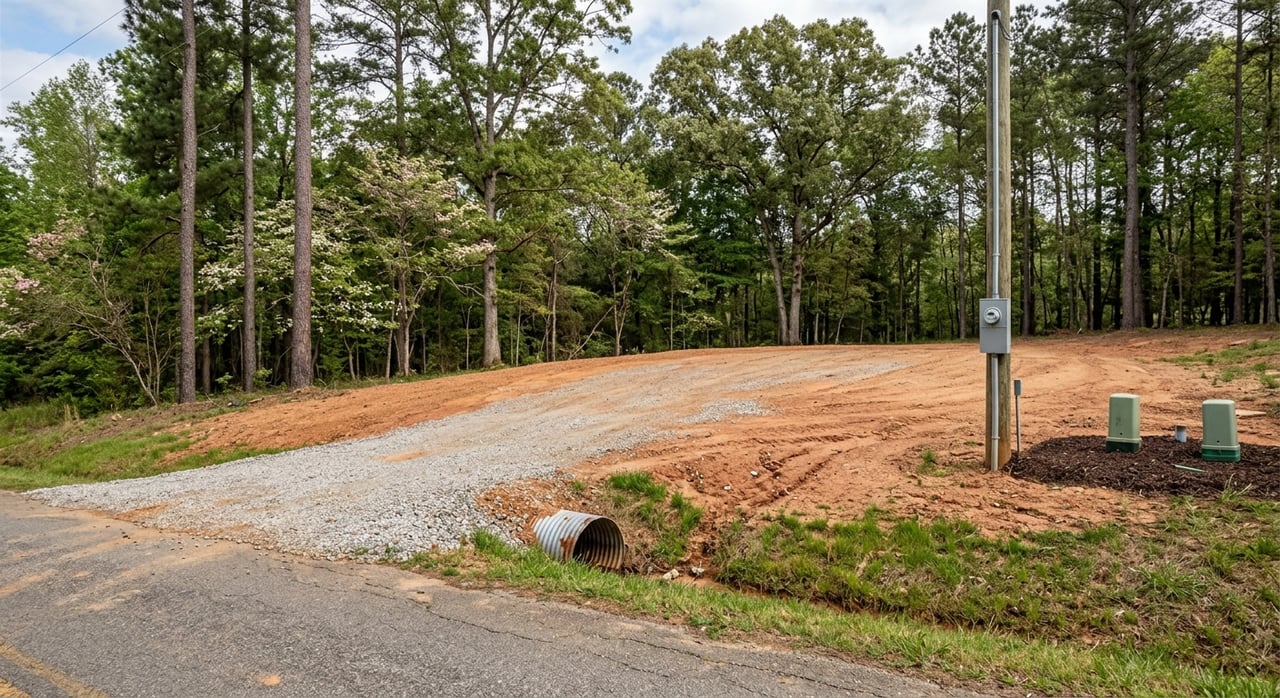
Access is one of the biggest drivers of land value in Ranger. A parcel that fronts a public road or already has a legally recorded access easement is often easier to use, easier to finance, and easier to resell.
Gordon County’s normal project process may involve driveway permits, driveway inspections, recorded deeds, plats, and septic permits. County agenda items have also shown landowners seeking variances tied to minimum public road frontage or access easements. That tells you access is not a small detail. It can be the difference between a tract that works for your goals and one that creates delays or extra expense.
If you are evaluating an offer, ask clear questions about:
- Public road frontage
- Existing recorded easements
- Driveway permit requirements
- Whether access matches the intended use
A low price on landlocked acreage may not be a deal if access issues limit what you can do with it.
Utilities matter more than many buyers expect
In rural land deals, utility access can have a major impact on value. Gordon County permit paperwork asks about sewage, water, and power service, and the county health department handles septic tank permits and private well protection.
That means a parcel with practical access to power, a workable septic path, and a realistic water solution may deserve a higher price than raw land that still needs everything figured out. The county’s comprehensive plan also notes that many rural areas are not typically served by sewer.
Broadband is another factor worth checking early. Gordon County reported that 17% of residential and business locations were unserved in 2022. If internet access matters to your household, work, or long-term plans, it should be part of your land evaluation from day one.
Intended use shapes the offer
Two 10-acre tracts can have very different values if they fit different goals. Gordon County’s rural and agricultural reserve guidance points toward uses like large-lot residential, agricultural activity, agribusiness, conservation, and passive recreation such as fishing and hunting.
That means the right price often depends on what the land can support. A buyer looking for a homesite may care most about septic feasibility, frontage, and a buildable area. A buyer interested in farming, timber, or recreation may weigh different features more heavily.
Before you make or accept an offer, define the property’s likely use as clearly as possible. That helps you compare it to the right type of land rather than treating all acreage as interchangeable.
What a strong Ranger land offer looks like
In Georgia, an initial real estate offer typically includes details such as the date of offer, property address, sales price, closing date, possession date, earnest money, due diligence date, closing attorney, and other material terms. On a land deal, those terms can matter just as much as the number on the first page.
For Ranger acreage, a strong offer usually matches the property’s real-world risks and investigation needs. If the buyer still needs to confirm access, septic feasibility, utilities, survey details, or zoning questions, the offer should reflect that.
Here are the items many buyers should try to verify before closing:
- Road frontage and legal access
- Survey and plat details
- Septic feasibility
- Water source options
- Power availability
- Any zoning or variance issues
- Title review and closing preparation
A clean, realistic offer is not just about price. It is about making sure the terms give you enough time to confirm that the land will work for your plans.
How sellers can judge land offers more clearly
If you are selling land in Ranger, it helps to look past the headline number. An offer may look strong, but the real value depends on whether the buyer understands the property and whether the contract terms are workable.
Georgia law also places rules on unsolicited real estate purchase offers. If a solicitation includes a monetary offer, it must disclose that the amount may not be fair market value. If the offer is below the county’s prior-year assessed value, it must also disclose that point.
That is a good reminder not to treat any surprise offer as proof of market value. Before accepting, compare the number against:
- County assessed value
- Access and frontage
- Usable acreage
- Utility realities
- Likely highest and best use
- The buyer’s contract terms
Sometimes the best offer is not the highest one on paper. It may be the one with terms that are more likely to close smoothly.
Common mistakes to avoid
Land deals often go sideways when buyers or sellers make assumptions too early. In Ranger, a little extra homework up front can save time, money, and stress later.
Watch out for these common missteps:
- Pricing every acre as buildable when parts of the land may be restricted or costly to improve
- Assuming acreage equals buildability without checking septic, driveway, frontage, or access requirements
- Ignoring carrying costs such as property taxes
- Overlooking broadband or utility gaps in rural areas
Property tax is another piece of the picture. Gordon County states that property tax is based on fair market value as of January 1 and assessed at 40% of that value. If land qualifies for conservation use, Georgia’s Department of Revenue says it is assessed at 40% of current use value, Gordon County is in CUVA #1, and the covenant must remain in qualifying use for ten years.
A simple way to compare Ranger land
If you want a practical framework, compare land based on price per usable acre, not just price per total acre. Then layer in the details that affect day-to-day use and future cost.
Ask yourself these questions:
- Does the tract have public road frontage or clear legal access?
- How much of the land is realistically usable?
- What will it take to handle septic, water, and power?
- Is the terrain likely to increase site work costs?
- Does the property fit the intended use?
- Are there any county approval issues to work through?
When you answer those questions, the asking price starts to make more sense. More importantly, you can make an offer that reflects the property’s actual usefulness instead of relying on acreage alone.
If you are buying or selling land in Ranger, having calm, local guidance can make a big difference. The right strategy starts with understanding what gives a tract value in the first place. When you are ready to talk through pricing, acreage, or offer terms, reach out to Amanda Brown for practical, relationship-first guidance.
FAQs
How should you compare land prices in Ranger, Georgia?
- Start with price per usable acre, then review access, frontage, terrain, utilities, and intended use before deciding whether the asking price makes sense.
What makes one Ranger land parcel worth more than another?
- Properties with better road access, more buildable area, practical utility options, and a clearer fit for the intended use usually support stronger pricing.
What should a buyer verify before making a land offer in Ranger?
- A buyer should confirm legal access, survey and plat details, septic feasibility, water source options, power availability, and any zoning or variance issues before closing.
Why do contract terms matter on Ranger land offers?
- Contract terms help protect the buyer during due diligence and can account for risks tied to access, septic, utilities, title work, and property usability.
What should a seller review before accepting a land offer in Ranger?
- A seller should compare the offer with assessed value, usable acreage, access, utility realities, likely best use, and the buyer’s overall contract terms rather than focusing only on price.